SACRAMENTO, Calif.,June 19, 2020 – During California State PTA’s Statewide Association Meeting from June 9-11, delegates from across the state voted to adopt a timely resolution making a commitment to advocate for increased funding for and education about chronic disease and injury prevention.
While high-quality healthcare is essential for all Californians, COVID-19 has revealed the consequences of not investing in early prevention, especially in communities of color. The pandemic has shown that those with underlying health conditions such as asthma, diabetes and cardiovascular disease have a higher risk of complications from COVID-19. Furthermore, communities of color not only have a higher prevalence of chronic disease, but are more likely to be employed as essential workers and live in crowded housing, which puts them at higher risk of exposure to and death from COVID-19.
“California children who grow up in poverty, especially disproportionately impacted children of color, are more likely to suffer from chronic diseases and to have increased risk for chronic health conditions into adulthood,” said Celia Jaffe, President of California State PTA. “Preventable childhood obesity, pre-diabetes and asthma attacks are at epidemic levels, with an estimated 39% of Californians suffering from at least one chronic condition, yet investment in prevention is woefully inadequate.”
“An ounce of prevention is worth a pound of cure,” said Shauna Olsen of Bancroft Middle School PTA, the PTA that submitted the resolution. “We must invest in proven public health practices such as increasing access to healthy foods and physical activity, creating safer communities, providing opportunities for youth development, and other strategies. With sustained funding we can reduce health inequities, prevent disease and improve the lives of children and families. “
Olsen works at the California Alliance for Prevention Funding, which conducted some of the research that supports the resolution. She spoke at the Statewide Association Meeting in favor of the resolution, which calls on PTA groups across the state to:
Educate school districts, parents and residents of the state about the harm preventable childhood illnesses and health inequities are causing California children.
Advocate for legislation that provides sustained funding for chronic disease and injury prevention.
Promote partnering with public health agencies, nonprofit and community organizations to advocate for prevention funding.
California State PTA has long supported the right of every child to have access to the tools and services they need to live a healthy life. At its virtual Statewide Association Meeting last week members from across the state voted to adopt important changes to the association’s legislative platform, welcomed new units, heard speeches from special guests, and voted on resolutions. Resolutions are proposed by individual units, councils or districts, and those that were adopted at the meeting will serve as the basis for action for all California State PTA members for the coming years.
From The Pulse, December 2019 Issue, California State PTA
Kids may not always recognize teasing as bullying – especially when it happens online – and some may be too embarrassed or ashamed to talk to their parents about it. That’s why it’s important to talk about online and digital behavior before your child starts interacting with others online. To prepare your child to go online – or if you know that your child is being bullied online – offer them these steps that can be taken immediately:
Sign off the computer. Ignoring a bully and walking away is definitely not a coward’s response! Bullies thrive on the reaction they get, and if you walk away or ignore hurtful emails or instant messages, you’re telling the bully that you won’t engage.
Don’t respond or retaliate. If you’re angry or hurt, you might say things you’ll regret later. Cyberbullies often want to get a reaction out of you, so don’t let them know their plans have worked.
Block the bully. If you get mean messages through an instant messaging or a social networking site, take the person off your buddy or friends list. You also can delete messages from bullies without reading them.
Save and print out bullying messages. If the harassment continues, save the evidence. This could be important proof to show parents or teachers if the bullying doesn’t stop.
Talk to a friend. When someone makes you feel bad, sometimes it can help to talk the situation over with a friend.
Tell a trusted adult. A trusted adult is someone you believe will listen and who has the skills, desire and authority to help you. Telling an adult isn’t tattling – it’s standing up for yourself. And, even if the bullying occurs online, your school probably has rules against it.
For more information and resources on bullying prevention, visit www.capta.org/bullying-prevention.
This week, we have a conversation with Tim Shriver, chairman of the Special Olympics and co-founder of CASEL, the Collaborative for Academic, Social, and Emotional Learning. Shriver shares what social and emotional learning looks like in a classroom and why he believes educators must be taught these practices.
Shriver will be the keynote speaker on Oct. 30 in Sacramento at a social and emotional learning conference co-sponsored by EdSource and the Partnership for Children and Youth. Listen Now
Educators spend an average of more than $450 on supplies for their classrooms, according to a new study.
By Andrew Soergel, Senior Reporter, U.S. News Aug. 26, 2019, at 3:03 p.m.
WITH BACK-TO-SCHOOL season in full swing, a new report suggests teachers will be shelling out hundreds of dollars on classroom supplies that they will need during the academic year.
The average K-12 public school teacher spends $459 each year on school supplies for which they are not reimbursed, according to a state-level analysis of National Center for Education Statistics survey data conducted by the left-leaning Economic Policy Institute.
California and Michigan lead the nation in unreimbursed teacher spending, with professionals in those states purchasing $664 and $628 in classroom supplies, respectively. Teachers in North Dakota and West Virginia, meanwhile, spend the least of their own money, at $327 and $333, respectively.
The findings of the report also showed some overlap with the annual U.S. News Best States rankings. Ten of the 20 states in which teachers spent the most without reimbursement ranked in the bottom 20 states for pre-K – 12 education. And 10 of the 20 states in which teachers spent the least placed in the top 20 of those U.S. News rankings.
“There is no other profession I can think of where workers, as a matter of culture and practice, are relied upon to subsidize an employer’s costs just so they can do their jobs,” Randi Weingarten, president of the American Federation of Teachers, said Thursday in a statement responding to the EPI report. “But teachers want what kids need, so each year they buy hundreds of dollars’ worth of supplies for their students without a second thought – even though they are paid over 20 percent less than similarly skilled professionals.”[
The report draws on relatively old figures, since the 2011-2012 NCES Schools and Staffing Survey was the most recent to include state-level microdata. But Emma García, an economist at EPI and author of the teacher spend report, adjusted those numbers for inflation to 2018 dollars. She also notes that the levels of spending in 2011-2012 were not an aberration, pointing to more recent survey numbers that suggest levels of unreimbursed teacher spend have risen slightly in recent years.
“This variation should not be interpreted as a variation in teachers’ altruism. State-by-state spending differences are likely due to a combination of factors, including students’ needs, how schools are funded in the state, the cost of living in the state, and other factors,” García wrote in the report.
EPI also points out that the $459-per-teacher average holds for all public school teachers, which includes approximately 5% who do not spend any of their own money on school supplies. The report indicates teachers in high-poverty areas often report spending more of their own money on school supplies ($523, on average, in 2015-2016) than teachers in lower-poverty areas ($434, on average, during the same period).
“This gap may reflect greater needs among students in high-poverty schools and more deficient funding systems for those schools,” according to the report.
During the 2016-2017 school year, the average salary for public elementary and secondary school teachers was $58,950, according to the National Center for Education Statistics. But wages, too, were shaped largely by geographic location.ADVERTISING
The average public teacher in New York or California, for example, brought in $79,637 and $78,711, respectively, during the 2016-2017 school year. In South Dakota and Mississippi, that average sat at just $42,668 and $42,925, respectively.
Some teachers in recent years have taken to online crowdfunding to help raise the money to cover their out-of-pocket classroom expenses.
Published Jun 10, 2019 at 6:46 AM | Updated at 7:46 AM PDT on Jun 10, 2019 by NBC 4
The Los Angeles Unified School District will continue its Summer Food Service Program, providing free and nutritional meals to anyone between the ages of 1 and 18 years old without requiring them to participate in classes or recreational activities.
To find a location, people may call 211 or visit the Food Services page.
More than 80 percent of LAUSD students qualify for either free or reduced-price meals, said director Manish Singh.
“Summer meals are essential to the ongoing health and nutritional needs for our students,” LAUSD Board Member George J. McKenna III said. “Our ability to deliver uninterrupted meal service when school is out underscores Los Angeles Unified’s commitment to serving the whole child.”
According to 2014 data, suicide is the second leading cause of death among U.S. teens. People who are suicidal often do or say things that are signals they may be thinking about committing suicide.
The National Alliance on Mental Illness (NAMI) shares common warning signs to watch for:
Threats or comments about killing themselves. This may begin with seemingly harmless comments like, “I wish I wasn’t here”
Increased alcohol or drug use
Aggressive behavior
Social withdrawal from friends, family and community
Dramatic mood swings
Talking, writing, or thinking about death
Impulsive or reckless behavior
Putting their affairs in order or giving away possessions
Saying goodbye to friends and family
Mood shifts from despair to calm
Planning, possibly by looking around, to buy, steal or borrow the tools needed to commit suicide, such as a firearm or prescription medication.
Knowing what to look for is the first step in helping someone who may be considering suicide. If you sense that something is wrong, trust your instincts.
FIND THE WORDS
Start the Conversation:
If you think a friend or family member is considering suicide, you might be afraid to bring up the subject. Don’t be afraid! Talking openly about suicidal thoughts and feelings can save a life. Talking about suicide won’t give the person ideas about death. The opposite is true — bringing up the subject of suicide and discussing it openly is one of the most helpful things you can do.
Tell the person you are worried about them. Mention the warning signs you have noticed. Be sure to have suicide crisis resources on hand.
Ask about Suicide:
Ask the person if they are thinking about suicide. If they say they are feeling hopeless or considering suicide, take them seriously.
Listen:
Express concern and reassure the person. Listen with empathy and provide support. Someone who is experiencing emotional pain or suicidal thoughts can feel isolated, even with family and friends around.
Create a Safety Plan:
A safety plan can help guide a person through a crisis and help keep them safe. A safety plan is a written list of coping strategies and sources of support for people who are at high risk for suicide. The strategies found in a customized safety plan can be used before or during a suicidal crisis.
Make sure the person you care about keeps the plan easily accessible in case they have thoughts of hurting themselves. Ask the person if they have access to any lethal means (weapons, medications, etc.) and help remove them from the vicinity.
Spanish –What’s the Bottom Line on the Risks of E-cigarettes for Kids, Teens, and Young Adults?
The use of e-cigarettes is unsafe for kids, teens, and young adults.
Most e-cigarettes contain nicotine. Nicotine is highly addictive and can harm adolescent brain development, which continues into the early to mid-20s.1
E-cigarettes can contain other harmful substances besides nicotine.
Young people who use e-cigarettes may be more likely to smoke cigarettes in the future.
The use of e-cigarettes is unsafe for kids, teens, and young adults.
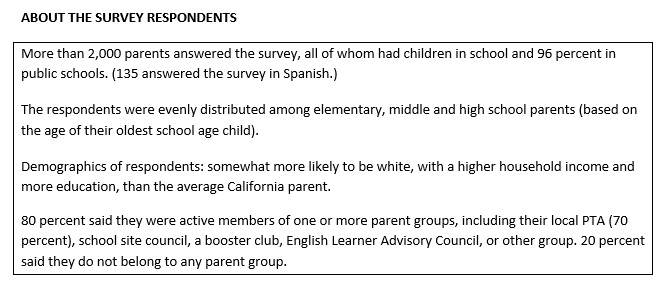
California parents say that science learning is vitally important and they support the kinds of changes in science instruction envisioned in the Next Generation Science Standards (NGSS), according to a recent survey conducted by California State PTA. The survey, with more than 2,000 respondents (see overview below), also revealed about half of parents believe their district does not provide enough science instruction at the elementary school level.
Parents’ belief in the importance of science was the strongest message out of the survey, with nearly nine out of 10 agreeing or strongly agreeing that learning science is equally important as reading, writing and math. The results were similar across all parents surveyed, regardless of the child’s age, their own science background, their ethnic and socio-economic background, or their engagement in school activities. In addition, 80 percent of parents reacted positively to messages that “science is central to how we understand and make sense of the world around us,” and “a strong science education is essential for college and career readiness.”
“As California proceeds with the implementation of the Next Generation Science Standards (NGSS), it is important for parents to understand and support the changes schools are making,” said California State PTA President Dianna MacDonald. “Our survey results indicate parents think science instruction is vital and that they welcome the kinds of changes the state expects schools to put into place.”
When presented with descriptions of how instruction will change under NGSS, more than 80 percent of the parents surveyed said they felt favorably or very favorably toward the new standards. Parents find particularly appealing the idea that the new standards encourage students to ask lots of questions and emphasize hands-on investigation and discovery. They were equally positive about the new standards beginning at an early age and engaging students who may not think of themselves as “science kids.”
The respondents were also nearly unanimous in supporting the need for children to be equipped with critical thinking, problem solving and analytical skills, consistent with the state’s learning goals in English language arts and mathematics.
The California State PTA survey also made clear that many parents see plenty of room for improvement in both the quality and quantity of science instruction their children currently receive.
Only 56 percent are satisfied with the amount of science their child is receiving, and the responses were markedly less positive among elementary school parents, with just 43 percent agreeing.
Less than half (46 percent) agreed with the statement “the science program at my child’s school is equal to the best schools in California.”
Asked whether their child attended a science class or had a science lesson either daily or weekly, seven out of 10 survey respondents said yes. However, that dropped to just over half (54 percent) among elementary parents.
Along with questions about their own children’s experiences, the PTA survey asked parents their opinion about whether science instruction in their school district as a whole was sufficient. The responses varied by grade level, with 53 percent saying their district was not providing enough science instruction in local elementary schools, 24 percent saying the same about middle schools, and 19 percent saying “not enough” in high school
The survey also indicates that schools could do more to enlist parents’ active engagement with science learning. Parents were nearly unanimous in saying it’s important for their child to have science-related learning experiences outside of the classroom but only half said they know a lot about the science their child is learning in school.
The majority also said they could better support their child’s science education if they better understood the curriculum and had ideas about fun science activities to do at home. Only about a quarter of parents agreed or strongly agreed that their child’s teacher provides those kinds of ideas, with the response consistent across all grade levels and ethnic backgrounds.
With the California State Board of Education’s formal adoption of instructional materials aligned with NGSS, more schools will be actively implementing new science teaching approaches. In addition, this spring students will take the first statewide science tests that will be reported for school accountability purposes. Notably, half of parents surveyed say that they are completely unfamiliar with the terms Next Generation Science Standards and NGSS.
Parents could play a significant role in helping schools’ NGSS implementation efforts succeed. However, their support will be much stronger if schools take the time to explain the new standards, address parents’ questions, and tap into their enthusiasm for science learning both in and out of school.